
Bitumen Driveways
Spray-sealed bitumen driveways for homes and longer driveways, a cost-conscious alternative to hot-mix asphalt.
Learn More →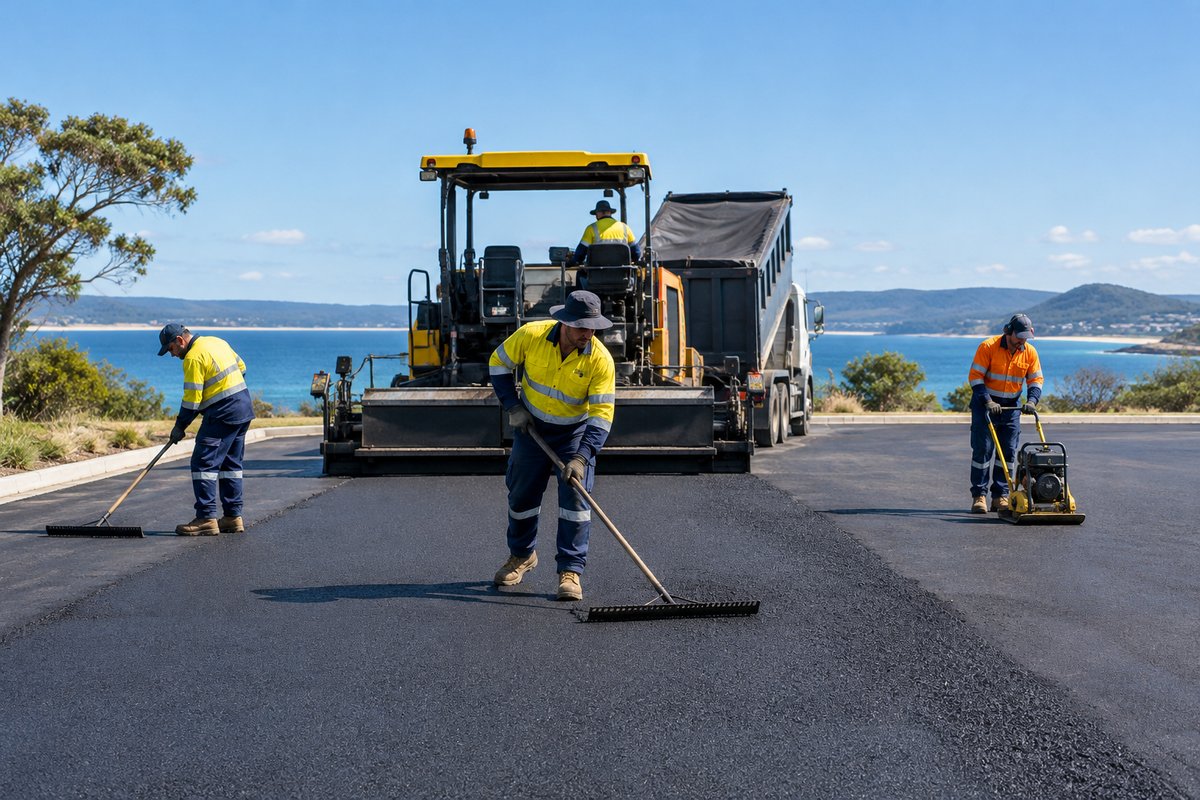
Asphalt car parks, access roads and hardstand for businesses, strata complexes, churches, schools and industrial sites.
Request a Free Quote
A car park takes a different beating to a house driveway. Delivery trucks turn on the spot, cars queue at the entry, and the same parking bays get loaded every day. We build commercial pavements from the ground up: subgrade checks, a compacted crushed rock base, a prime or tack coat, then hot-mix asphalt laid with a paving machine and compacted with steel drum and multi-tyre rollers. The layer depths and mix are set by the traffic the pavement will carry, so a small medical centre car park and a warehouse hardstand with forklifts and semi-trailers get very different builds.
Conditions across the Central Coast shape how we approach every job. Near the lakes at Tuggerah, Budgewoi and The Entrance, high water tables and clay subgrades soften in wet weather, and that is usually where potholes and rutting start. Sites closer to the coast deal with humidity and salt air. Further west, summer heat bakes the surface and speeds up oxidation of the binder. Heavy east coast rain is the real test. Water that sits on a car park soon finds its way under the asphalt, so we design falls to pits, kerb lines and spoon drains before a single tonne of hot-mix goes down.
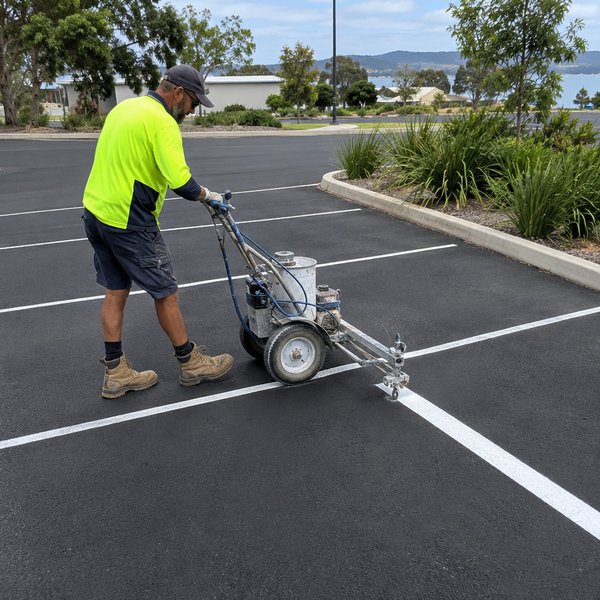
Most commercial clients need the site to keep working while we're on it. We can stage the work in sections, so part of the car park stays open while the rest is prepped and paved. Once the surface is down, our line marking crew can set out parking bays, arrows, pedestrian crossings and accessible spaces. If your existing car park is sound underneath but tired on top, asphalt resurfacing and repairs can be the more cost-effective path, and we'll tell you honestly which option suits your pavement.
From subgrade checks to fresh line marking, here's what happens on site
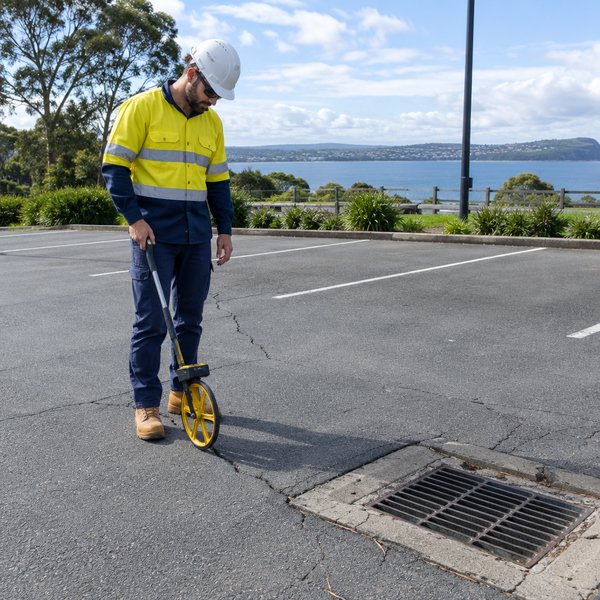
We walk the site, look at how traffic moves and check the existing surface and subgrade. We note soft spots, ponding, drainage pits and levels. From there we set the base depth, asphalt mix and falls to suit the vehicles using the area.
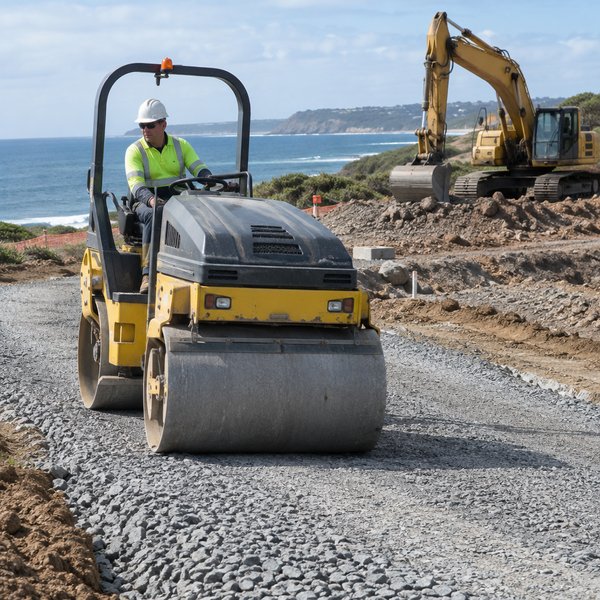
Failed material and soft clay are dug out and replaced where needed. We spread crushed rock road base in layers, trimming each layer to level and compacting it with a vibrating roller. A well-compacted base matters more than anything else in a car park build.
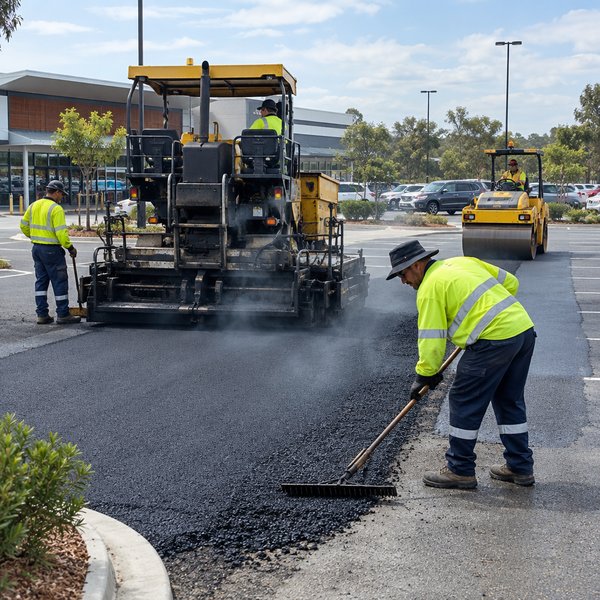
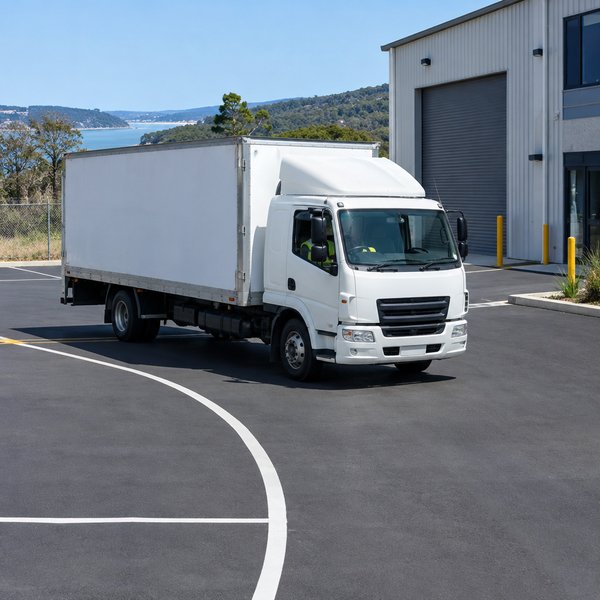
We spray a prime or tack coat so the asphalt bonds to what's underneath. Hot-mix asphalt arrives by truck and goes through a paving machine, with the crew raking joints and edges by hand. Steel drum and multi-tyre rollers follow straight behind while the mix is still at working temperature.
We finish kerb edges and pit surrounds, then check that water runs where it should. Once the asphalt has cooled and cured enough, the line marking crew sets out bays, arrows and signage areas. The site is cleaned up and opened to traffic.
Practical results for businesses, strata complexes and commercial properties
A properly built base spreads the load from delivery trucks and turning cars. That means fewer ruts at the entry, fewer potholes in the busy bays and less patching each year. Your car park stays usable instead of becoming a constant repair job.
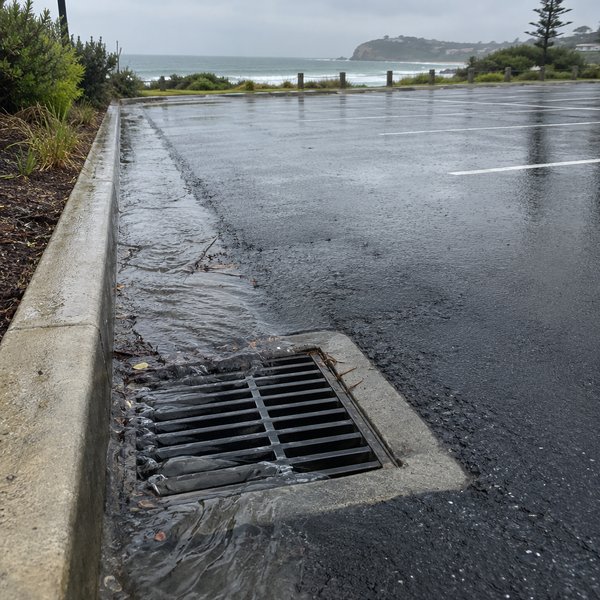
Correct falls and pit levels move stormwater off the pavement quickly. That protects the base from softening, which is the main cause of failure on lake-side and clay sites. It also stops puddles forming in front of shop doors and walkways.
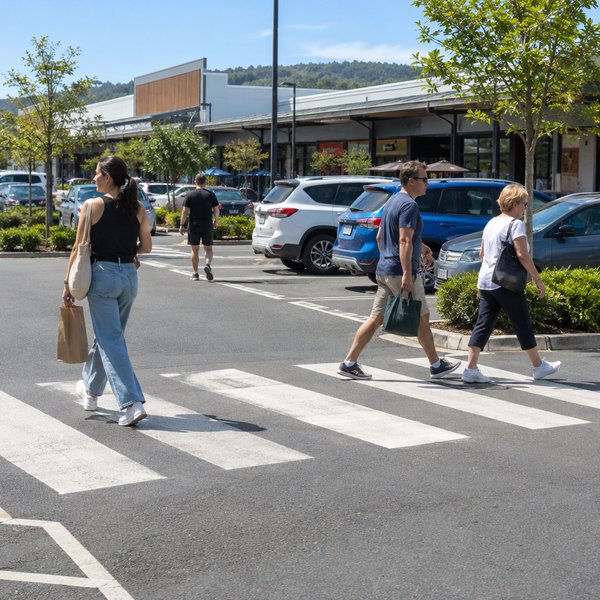
An even surface removes trip hazards and the bumps that damage low cars. With clear bays, arrows and pedestrian crossings marked, drivers know where to go. Customers find a spot easily, and your site looks looked-after.
From sandy soils around Woy Woy and Umina to wet clay near Wyong and Lake Haven, the ground changes across the region. We set base depths and drainage around what's actually under your site. That's how a pavement holds up through a wet winter.
We handle excavation, road base, compaction, drainage shaping and hot-mix laying ourselves. You get one crew responsible for the whole pavement. If something needs fixing, you know who to call.
Once the asphalt is down, we can mark out bays, arrows, crossings and accessible spaces. There's no waiting for a separate contractor to fit you in. Your car park is ready to use with a clear layout.
We'll tell you whether patching, resurfacing or a full rebuild makes sense for your budget and pavement. Strata managers get clear scopes they can take to committees. Builders get a contractor who works to their site program.
Common questions answered
The main factors are the area, the condition of the subgrade, how much excavation is needed and the type of traffic. A truck hardstand needs a deeper base and heavier asphalt than a staff car park, and drainage work, kerbing and line marking add to the scope. We measure the site and give you an itemised quote so you can see where the cost sits.
In most cases, yes. We can split the job into stages so one section is worked on while the rest stays open, and we plan entries and exits around your trading hours. How the stages are set up depends on the site layout, so we work through it with you at quote time.
If the cracking is only on the surface and the base is still firm, a mill and overlay is often enough. Wide alligator cracking, ruts and potholes that keep coming back usually point to a failed base, which needs digging out. We check the pavement on site and explain which approach fits before you commit.
Areas around Tuggerah Lake, Budgewoi and The Entrance often have clay soils and high water tables. When heavy rain soaks the subgrade, it loses strength and the asphalt above starts to crack and sink. Good drainage, a stronger base and sealing cracks early make a big difference on these sites.
Keep drains and pits clear, sweep away debris and fix small cracks and potholes before water gets underneath. Repaint line marking when it fades, especially in sunnier western areas where UV wears it faster. A quick look after big storms helps you catch problems while they're still small.
We provide Car Parks & Commercial Asphalt throughout the Central Coast, NSW and surrounding suburbs.
Don't see your area? Contact us to check if we service your location!
View All Areas